



06 / 06
Lumio: a node-based workspace
A productivity app where everything is a universal node: every element — task, note, file, event or account — takes a type and connects into a graph. Web, desktop and mobile, with AI and real-time collaboration.
Essay
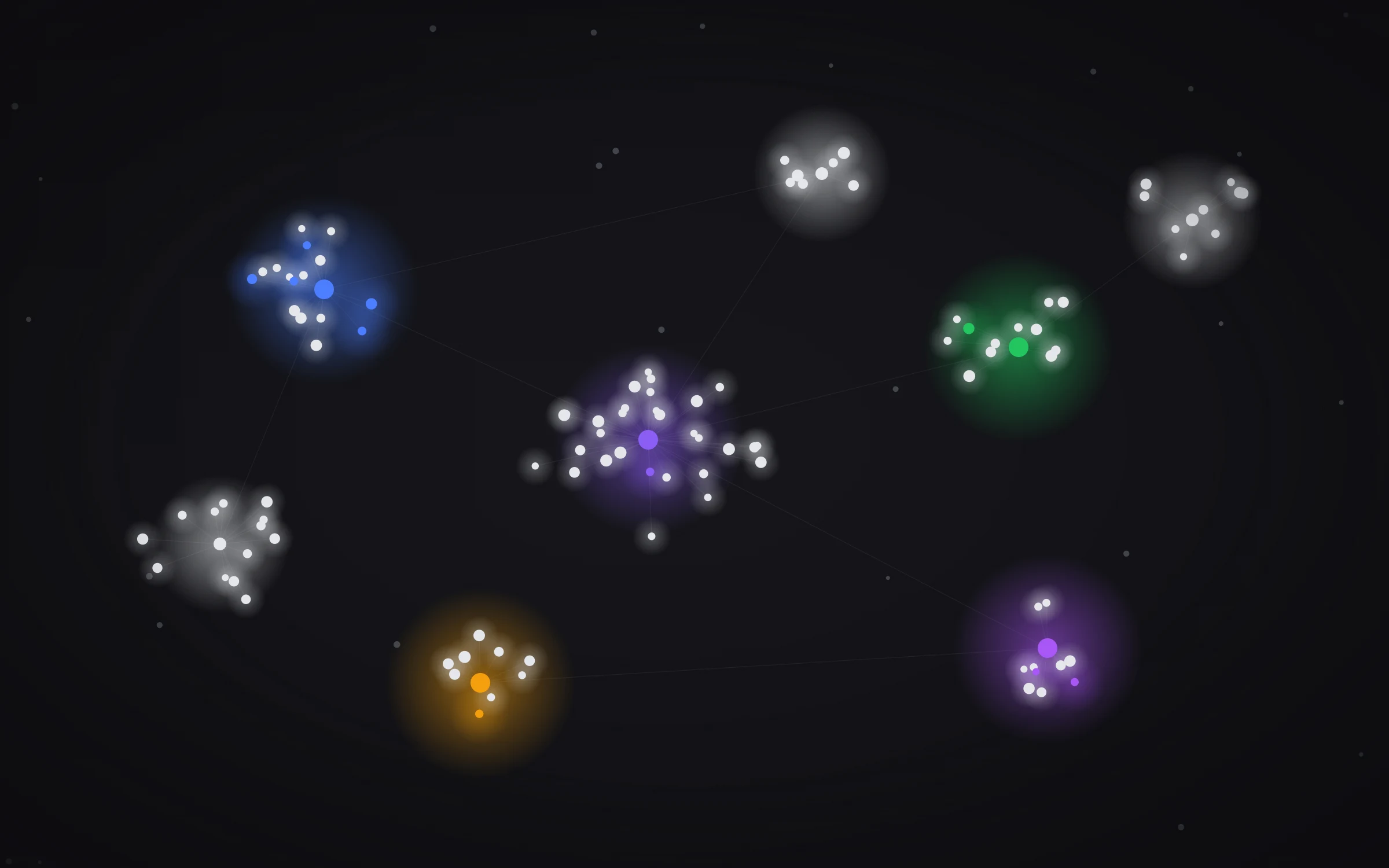
Lumio was born from a simple idea: instead of splitting life across apps — notes on one side, tasks on another, email, finances, calendar — everything can live in a single system of universal nodes. Each node has a type (folder, task, note, page, event) and can relate to others, forming a graph that organizes itself and is explored visually.
The app integrates a hierarchical node workspace — with list, graph, document and canvas views — plus finance with budgets and shared debts, a Google-synced calendar, and Connect: email and messages with AI-assisted expense detection. Centro works as the central hub to search and navigate the whole graph, and Zen mode expands the visualization full-screen.
Technically it is a multiplatform application: Next.js and TypeScript, PostgreSQL with Prisma, state serialized with Zustand, editing with Tiptap and Excalidraw, real-time collaboration with Hocuspocus and Yjs, and AI with Gemini on server-side routes. It runs on web, desktop (Electron) and mobile (Capacitor, iOS and Android).
Credits
- Design and development — Cristian Aroca Vega
- Stack — Next.js · TypeScript · Prisma (PostgreSQL)
- Real-time — Hocuspocus + Yjs · AI — Gemini
- Clients — Web · Electron (desktop) · Capacitor (iOS/Android)